What Is an EAN Code, and Why Do You Need One?

Written byLeon · Founder, CEO
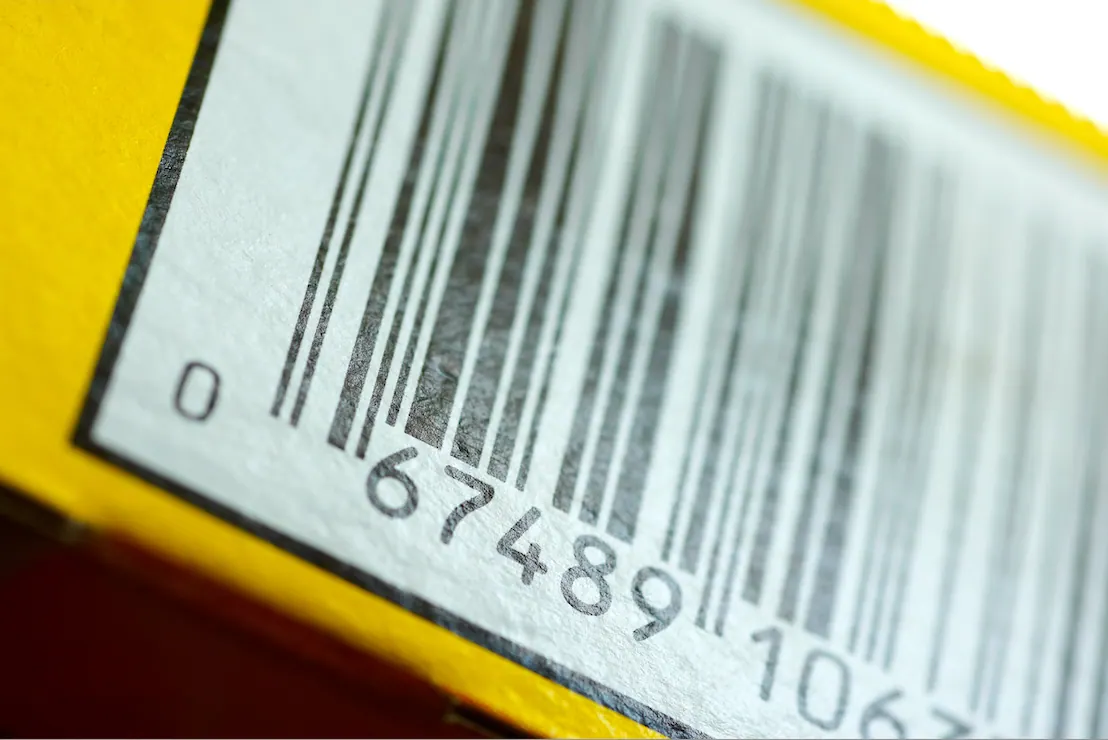
An EAN code is a standardised product identifier made up of a barcode and a unique string of numbers, usually 13 digits, that pinpoints exactly one product. EAN stands for European Article Number, and because it is now used almost everywhere outside the United States and Canada it is also called the International Article Number. You need one because most retail systems and major marketplaces, including Amazon, require an EAN to list, scan, and track a product.
What is an EAN code?
An EAN code is a unique number, paired with a scannable barcode, that identifies a single product. It is read either by scanning the barcode or by entering the number directly, and that number resolves to the exact item it belongs to. The system began in Europe but spread worldwide, so today the same code works across most retail and ecommerce environments.
In practice, an EAN is used in ecommerce inventory management, at point of sale registers, and inside online listings. Each product carries its own number, and the only way to read the data behind it is to scan the barcode or read the digits. That makes products quick to identify and hard to confuse with one another.
EAN codes also belong to a wider family. Under GS1, the body that maintains these standards, EAN is one of the formats grouped under the umbrella term GTIN, the Global Trade Item Number. So when a marketplace asks for a GTIN, an EAN satisfies that requirement.
Why do you need an EAN code?
You need an EAN code because it lets retail and ecommerce systems recognise your product instantly, and because the largest marketplaces will not list it without one. An EAN turns a physical item into something a warehouse, a checkout, and an online catalogue can all read the same way. Without it, listing, stocking, and selling at scale become slow and error prone.
The practical benefits add up quickly:
- It streamlines inventory management, since stock can be scanned in and out rather than logged by hand.
- It increases transparency and reliability across ecommerce, because every party reads the same standardised number.
- It lets sellers and merchants search for and match products anywhere in the world.
- It reduces human error, because scanning replaces manual code entry.
- It cuts reliance on paperwork, which supports wider digital workflows.
- It packs a lot of identifying information into a very small space on the packaging.
- It stays readable even at awkward angles, so decoding is fast and reliable.
- It suits fast moving automated scanning, which keeps high volume operations running.
- It helps track products and understand buyer behaviour and trends over time.
How do EAN codes work?
An EAN code works by encoding a unique number into a barcode that machines can read in a fraction of a second. The barcode is scanned at a checkout, in a warehouse, or against a listing, and the system looks up the product tied to that number. When a barcode cannot be scanned, the same digits can be keyed in manually to retrieve the product.
Because the number is standardised and centrally assigned, the same code means the same product to a manufacturer, a merchant, and a buyer alike. That shared meaning is what makes everyday ecommerce tasks such as price monitoring and product matching possible. Without it, every seller would be working from a different reference point.
How are EAN codes structured?
A standard EAN code is 13 digits, and those digits are not random. They break into four blocks, each describing a different part of the product's identity. Very small products can use a shorter 8 digit code instead, typically when a full code would crowd the packaging, which is common on items like tobacco or sweets.
The 13 digit code combines a country code, a company or manufacturer code, an article number, and a check digit. Here is what each block tells you:
What information is contained in an EAN code?
Each block of the EAN stands for a specific element you can use to identify the product. Read together, they uniquely describe the item.
- Country code. The first two or three digits indicate the vendor's country of origin.
- Manufacturer code. The next four or five digits represent the brand or company that makes the product.
- Product code. These digits carry the distinguishing details, such as style, size, colour, and model.
- Check digit. The final digit is a verification key that confirms the rest of the code was read correctly.
Does each product variant need its own EAN code?
Yes. Every distinct version of a product needs its own EAN code, because each variant is treated as a separate item. Imagine an office chair sold in three colours, each available with or without armrests. That is three colours multiplied by two armrest options, so you would need six EAN codes in total, one for every combination.
Where is the EAN code located on a product?
An EAN barcode can sit almost anywhere on a product, since placement depends on the item's shape and packaging design. Most often you will find it on the top or bottom of the item. The key requirement is that the barcode stays flat and clearly visible so it can be scanned reliably.
Where are EAN codes used?
EAN codes are used across most of the world, in line with their name as the European Article Number. Adoption has grown well beyond Europe and now covers most regions, with the notable exception of the United States and Canada. There, the 12 digit Universal Product Code, or UPC, is used instead and works in much the same way.
Within those regions, EAN codes appear throughout retail and ecommerce. Stores use them at point of sale systems for accounting, wholesale ordering, and accurate inventory counts, while online sellers use them to list and match products. The shared standard means manufacturers, merchants, and buyers anywhere can search for and manage the same item without ambiguity.
Who assigns EAN numbers?
EAN numbers are assigned by a central authority, not generated freely by individual sellers. If you simply made up a number, it would not reliably work across warehouse or retail systems and could clash with an existing product. The codes have to come from an organisation that maintains the standard.
The main organisation behind EAN codes is GS1, a not for profit body that designs and maintains business process standards. If you are a merchant who needs an EAN, you can buy one from GS1, or bulk order several at once. Third party suppliers also sell EAN codes, sometimes at lower prices, but any such supplier must comply with GS1 standards, so it is worth double checking before you buy.
How to get an EAN code
How you get an EAN code depends on whether you made the product. If you sell an item you did not manufacture, it should already carry an EAN supplied by the manufacturer, so you can reuse that. If you are the manufacturer and do not work with a third party supplier, you request the codes yourself, which matters when you want to sell on Amazon or other marketplaces that require an EAN.
Getting a GS1 code means submitting an application to GS1 or to a company that complies with GS1 standards. Once your application is submitted, approved, and processed, the barcodes are sent to you in image formats such as JPEG, TIFF, or EPS. From there you can size and place them onto your product packaging.
Do you always need an EAN code?
Not in every single case, but in most selling scenarios the answer is effectively yes. If you sell products online or offline in Europe, an EAN strengthens your product's value, your market position, and your credibility as a business. Large global marketplaces such as Amazon also require vendors to use EAN numbers, so going without one usually means a missed opportunity.
Situations where you may not need an EAN code
There are a few cases where an EAN is not strictly required, though you should still confirm the rules of the channel you are selling on.
- Selling outside Europe. EAN codes are not always necessary if you do not plan to sell within Europe, although you will still need to meet the regulations and expectations of those non European markets.
- Arts and crafts products. Some one off or unique handmade items do not need an EAN. To sell art and craft items on Amazon you typically apply for brand registry, which involves submitting trademark certification for your products and business. As an alternative, you can apply for a product code exemption through Amazon.
EAN code tips
A few practical choices keep your barcode reliably scannable. The barcode must stay clearly visible whatever its size, so contrast matters more than anything.
- Use a black code on a white surface, which gives the strongest contrast and readability.
- Avoid effect coatings such as metallic finishes, because they can reduce how well the barcode reads.
What is the difference between EAN and UPC codes?
EAN and UPC are the two most common barcode formats in modern retail, and they do the same job in different regions. The UPC is 12 digits and used in North America, while the EAN is 13 digits and used across most of the rest of the world. Beyond the digit count, the main visible difference is in how the numbers beneath the barcode are spaced out.
Conclusion
An efficient, transparent ecommerce system depends on standardisation, and EAN codes provide it. If every vendor picked their own numbers, the result would be duplicates, confusion, and far more errors. EAN codes give vendors, manufacturers, and buyers a single shared reference, and if you want to sell on Amazon or other major marketplaces, having one for each product is essential.
Frequently asked questions
- What does EAN stand for?
- EAN stands for European Article Number. Because it is now used across most of the world, it is also called the International Article Number.
- How many digits does an EAN code have?
- A standard EAN code has 13 digits. Very small products can use a shorter 8 digit code, typically when a full code would take up too much of the packaging.
- What is the difference between an EAN and a GTIN?
- GTIN, the Global Trade Item Number, is the umbrella term GS1 uses for product identifiers. EAN is one of the formats within that family, so an EAN code is a type of GTIN. When a marketplace asks for a GTIN, an EAN satisfies the requirement.
- What is the difference between EAN and UPC codes?
- Both identify products with a barcode and number. The UPC has 12 digits and is used in North America, while the EAN has 13 digits and is used across most other regions. They also differ in how the digits beneath the barcode are spaced.
- Where do I get an EAN code for my product?
- You can apply for EAN codes through GS1, the organisation that maintains the standard, or through a supplier that complies with GS1 standards. If you resell a product you did not manufacture, it usually already carries an EAN from the manufacturer.